
Email Us

info@germanclinic.es

Call Us

+34 951 745 370

Gastroenterology and Endoscopy

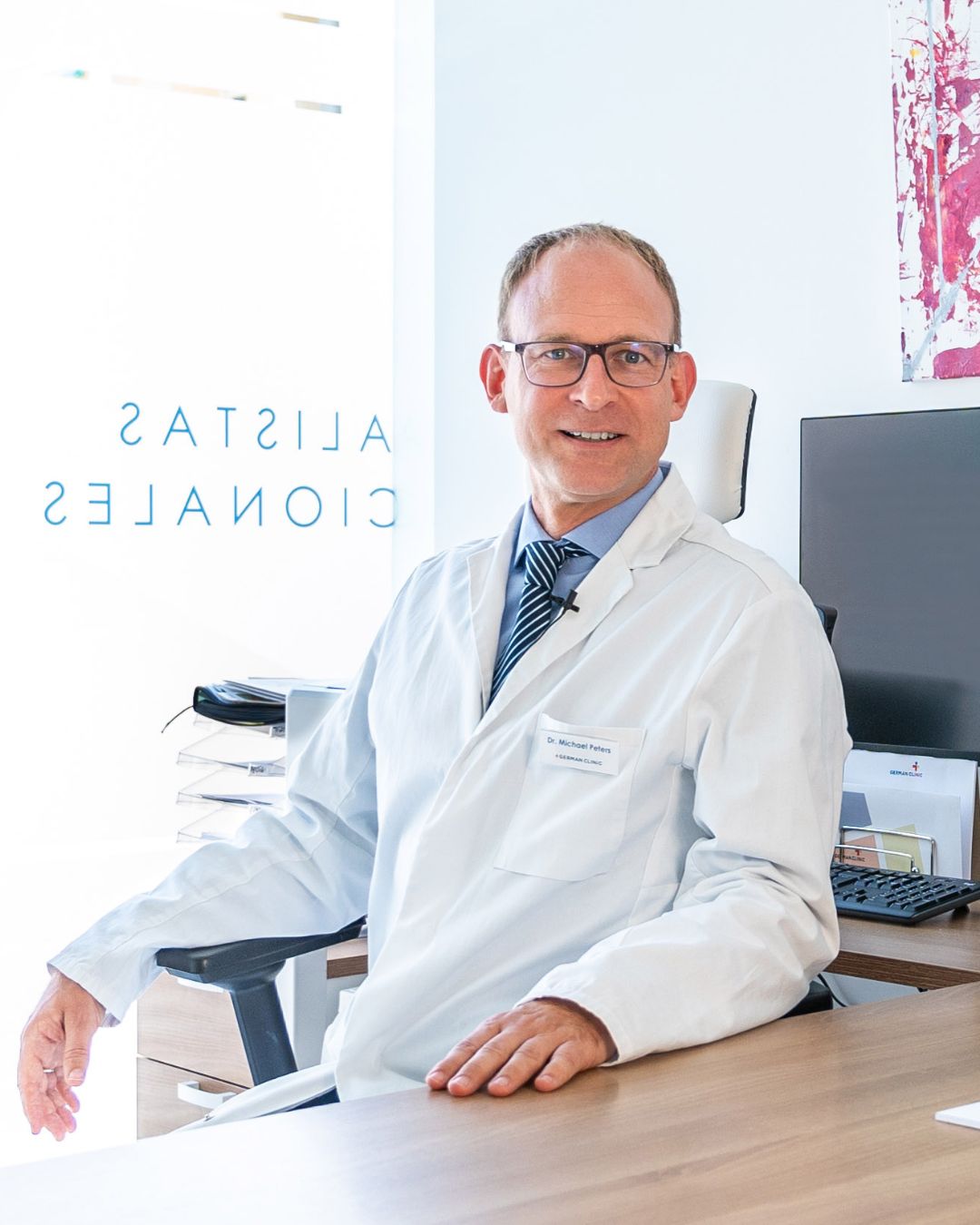
Dr. Michael Peters

Gastroenterology and Endoscopy in Marbella

Gastroenterology is a medical speciality that deals with the diagnosis and treatment of diseases and disorders of the digestive system. This speciality covers the examination of the gastrointestinal tract, including the oesophagus, stomach, intestines, liver, pancreas and gall bladder. Gastroenterologists are experienced in treating a wide range of conditions such as acid reflux, ulcers, inflammatory bowel disease, cirrhosis of the liver and bowel cancer.

In order to accurately assess and understand these complex diseases, gastroenterologists use various diagnostic procedures, with endoscopy being a cornerstone of their toolkit. Endoscopy uses a flexible tube with a camera to visualise and examine the inside of the gastrointestinal tract directly. There are several types of endoscopic procedures, each tailored to different parts of the digestive system:

  1. Gastroscopy: In this procedure, also known as upper endoscopy, the endoscope is inserted through the mouth to examine the oesophagus, stomach and the first part of the small intestine (duodenum). It is often used to diagnose and treat conditions such as ulcers, gastro-oesophageal reflux disease (GERD) and bleeding in the upper gastrointestinal tract.
  2. Colonoscopy: In this procedure, the endoscope is inserted through the rectum to examine the entire colon and rectum. It is an important tool for detecting bowel cancer, polyps and inflammatory bowel diseases. Colonoscopy is both a diagnostic and a therapeutic procedure in which biopsies and polyps can be removed.
  3. Capsule endoscopy: This innovative technique involves swallowing a small, pill-sized camera that captures images of the entire digestive tract, especially the small intestine, which is difficult to reach with conventional endoscopy. It is particularly useful for the diagnosis of unclear gastrointestinal bleeding and small bowel disease.

To ensure patient comfort and minimise discomfort during these procedures, sedation is often administered so that the patient is completely asleep and unaware of the procedure.
Specialities at the German Clinic Marbella

  • Ultrasound examination of the abdominal organs and intestines
  • Capsule endoscopy for small and large bowel endoscopy
  • (PillCam Colon2 , PillCam Crohns, PillCam UGI, PillCam SB3)
  • High-resolution video endoscopy with Pentax Imagina EPK i5500c processor and HD video endoscopes from the i10c series
  • LactoFan hydrogen breath tester for the detection of lactose intolerance, SIBO,
  • Fructose and sorbitol intolerance
  • Gastroscopy and colonoscopy with propofol sedation at the German Clinic Marbella including polyp removal
  • Echoendoscopy and therapeutic ERCP in collaboration with the
  • Hospital Quironsalud Marbella
  • Proctoscopy with haemorrhoid ligation therapy
  • PCR multiplex rapid tests (QIAstat-Dx Gastrointestinal Panel) for 24 bacterial, viral and parasitic gastrointestinal pathogens (Qiagen QIAstat-Dx syndromic testing system)
  • LacTest – easy to use at home – urine test for the detection of
  • Lactose intolerance
  • Gastric balloon for weight loss
  • Endoscopic reflux surgery (Esophyx)
03 Gastroenterologia Michael Peters

Frequently Asked Questions About Gastroenterology and Endoscopy in Marbella

If you suffer from symptoms such as reflux, abdominal pain, bloating, wind, changes in bowel habits, diarrhoea, constipation or recurring digestive problems.
For example, heartburn, persistent bloating, nausea, discomfort after eating, blood in the stool, pressure, ongoing abdominal pain or unintentional weight loss.
A gastroscopy examines the oesophagus, stomach and duodenum. A colonoscopy assesses the large intestine and rectum. Which examination is appropriate depends on your symptoms. Both procedures are carried out under sedation (a sleep injection) and can also be performed together.
Yes. In virtually all cases the examination is carried out under sedation by an anaesthetist, so that you are as relaxed as possible and completely unaware of the procedure. The medication we use induces a deep sleep from which the patient wakes relaxed and content. Recovery time is short, and afterwards we offer coffee or tea and a light snack. This is followed by a consultation with Dr Peters. It is important that after sedation you are not fit to drive and must not drive until the following day.
Yes. Various tests are available, such as those for lactose, fructose or sorbitol intolerance, as well as for SIBO. Thanks to our own laboratory, we can also provide rapid diagnosis of gastrointestinal infections. We have a Qiagen Multiplex PCR device that can reliably detect gastrointestinal infections (especially diarrhoeal pathogens) and respiratory pathogens in under 2 hours.
Our own laboratory enables faster results, shorter turnaround times and more efficient coordination between diagnosis and treatment. Our POC (point-of-care) laboratory allows complete emergency diagnostics within 30 minutes, so the patient can wait for the results and the doctor can initiate the necessary treatment immediately. Particularly in bacterial infections, this enables rapid administration of antibiotics if required.
Yes. Polyps can in many cases be removed during the colonoscopy. Haemorrhoids can also be treated depending on the findings using appropriate methods.
Not always, as many of our patients come to us with complex conditions. At the first consultation, your symptoms, previous findings and past examinations are discussed in detail so that the next appropriate steps can be planned. We therefore allow up to an hour for the first appointment. For a gastroscopy or colonoscopy, a preliminary consultation is always required in which the examination, the preparation (particularly for colonoscopy, the bowel must be cleansed beforehand) and possible complications are explained.
The term endoscopy refers to the examination of natural body openings using a flexible tube with a camera, and includes both gastroscopy and colonoscopy. Gastroscopy is performed through the mouth, colonoscopy through the anus. For both examinations our patients receive a sleep injection administered by our anaesthetist, so they are unaware of the examination itself. This sleep injection (also called sedation) is not comparable to a general anaesthetic required for major surgery, as the patient breathes independently and is simply in a deep sleep.